
Zoya:Where Love Begins
itzilaDevEntertainment
4.8379.00 Reviews
- Version
- 1.2.3
- Installs
- 50.00K
- Age Rating
- Mature 17+
Screenshots

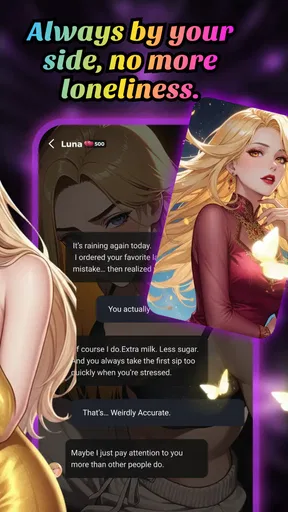
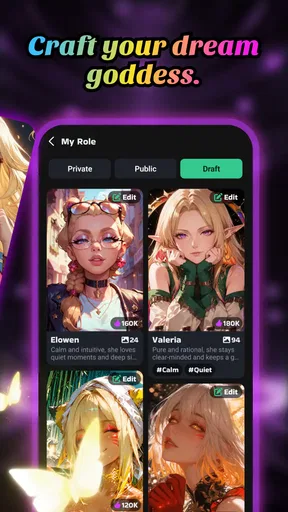
Our Review of Zoya:Where Love Begins
 Analysis by Appyee
Zoya: Where Love Begins is the kind of entertainment app I would open when I want a private, story-led conversation rather than another passive video or a conventional game. Its central idea is a fantasy AI roleplay chat with a virtual companion, and that description is more useful than it may first sound: the appeal depends less on winning, collecting, or completing missions and more on how willingly I enter an ongoing fictional relationship with the character. After spending time with it, my view is clear: Zoya works best as an imaginative conversation space, not as a replacement for real companionship or a full role-playing game.
The app comes from itzilaDev and sits in the Entertainment category. It is free to install, carries a Mature 17+ age rating, and uses optional in-app purchases ranging from $3.49 to $54.99 per item. That combination immediately tells me who should approach it carefully: adults who enjoy fantasy dialogue and are comfortable deciding whether extra paid access adds enough value for their own use. Younger users and anyone looking for a strictly family-friendly chat experience should look elsewhere.
It has attracted over 50 thousand installs, with an average rating of 4.8 from around 3.1 thousand ratings and 379 written reviews. Those figures suggest that the concept is connecting with a defined audience, but they do not remove the need to test the experience personally. AI companion apps can feel very different depending on how much time a person gives the conversations, how specific their prompts are, and whether they want playful fiction or something emotionally deeper.
How the fantasy companion experience feels in everyday use
I find the fantasy companion format works best when I treat each chat as a small, deliberately shaped scene rather than an endless conversation. A quick opening note about the mood or direction I want can make a short session feel more satisfying and easier to steer. That practical approach also helps clarify where this kind of interactive entertainment stands apart from more structured alternatives.
A conversation works better when I treat it like collaborative fiction
My first useful adjustment was to stop approaching Zoya as though it were a search engine. A search engine is judged by accuracy and speed; an AI roleplay companion is judged by atmosphere, responsiveness, and whether it gives me something to build on. When I wrote short, vague messages, the interaction felt easier to lose direction. When I supplied a setting, a mood, and a small problem for the character to react to, the exchange became much more engaging.
That makes the app particularly suitable for people who already enjoy writing prompts, imagining alternate worlds, or improvising dialogue. I do not need to be a novelist, but I do need to contribute some creative direction. A simple setup such as “we are meeting after a difficult journey, and I am hiding an important decision” gives the conversation more shape than a string of greetings. The companion can then respond within a scene instead of forcing me to carry every moment.
This is also where the app differs from ordinary messaging. With a human friend, the conversation is grounded in a shared life and genuine mutual needs. With Zoya, the value comes from the fictional frame. I can explore a dramatic exchange without arranging plans, worrying about social timing, or asking another person to participate. That privacy and immediacy are convenient, especially during a short break when I want a small imaginative escape.
A realistic evening scenario shows both the appeal and the boundary
Imagine coming home after a tiring day and having twenty minutes before dinner. A streaming app might offer something entertaining, but it asks me to sit back and consume a finished story. A standard mobile game might give me objectives, but it may require focus and progression. Zoya offers a different kind of break: I can continue a fantasy conversation, introduce a new dilemma, and decide how the scene develops.
For that use, I found it more rewarding to begin with a clear intention. I might ask for a calm conversation after a failed mission, request a change from romance to mystery, or tell the companion that I want shorter replies because I am only taking a quick break. These instructions make the session easier to control. They also reduce the common frustration of an AI chat drifting into a tone I did not want.
The trade-off is that the experience asks for attention in a different way. I am not simply relaxing; I am co-authoring. If I am too tired to add context, the session can feel flat. Someone who wants instant, polished entertainment may prefer a television episode, audiobook, or story game with authored dialogue. Zoya is strongest when I want participation without the pressure of writing a complete story myself.
The most useful habit is setting boundaries at the start
One of the less obvious lessons from using a virtual companion is that the opening message has an outsized effect on the rest of a session. I get better results when I define three things early: the role I want the character to play, the emotional tone, and the limits of the scene. For example, I can ask for a supportive fantasy guide, keep the exchange light, and state that I want adventure rather than romance. This is not just a creative trick; it is a way to make the app feel more predictable.
I also recommend restarting the direction when a conversation becomes repetitive instead of endlessly correcting individual replies. A compact reset can explain what has changed, what should be remembered for the current scene, and what kind of answer I want next. That workflow is more efficient than arguing with every response. It turns a drifting chat into a guided writing session.
Another practical tip is to use the app in short chapters. I prefer ending after a meaningful decision rather than continuing until the dialogue loses energy. On my next visit, I can summarize the last scene and introduce a fresh objective. This keeps the companion from becoming background noise and makes the experience feel more like an episodic story than an endless message thread.
Where the app is more personal than a normal role-playing game
Traditional role-playing games usually give me a designed world, defined mechanics, visible objectives, and a progression system. Their strength is consistency: I know what actions are possible and what kind of reward follows. Zoya shifts the work toward conversation. I can test an unusual premise immediately, change the mood without waiting for a quest, and explore a character-focused moment that would never justify a full game level.
That flexibility is its strongest creative advantage. If I want to explore how a fictional companion reacts to hesitation, jealousy, loyalty, fear, or a difficult promise, I can simply introduce the idea. I am not limited to the choices a developer anticipated. For readers who enjoy interactive fiction but find large games too demanding, this can be a pleasant middle ground.
However, the same freedom creates weaker structure. There is no guarantee that every exchange will feel like part of a carefully edited narrative. A conventional story game is usually better when I want dramatic pacing, memorable supporting characters, and a conclusion shaped by professional writers. Zoya is better when I want to steer the scene myself and accept some unpredictability in return.
The emotional tone needs responsible expectations
The virtual companion format can feel warm and absorbing, but I think it is important to keep the nature of the interaction in view. The character is part of an AI roleplay experience, not a human relationship. I would not use the app as my only outlet when I am lonely, distressed, or dealing with a serious personal problem. It can provide a fictional conversation and a moment of comfort, but it cannot offer the accountability, lived experience, or care of a trusted person or qualified professional.
The Mature 17+ rating also matters here. Even when I approach the app for fantasy dialogue, the overall audience positioning is adult rather than child-oriented. Parents choosing entertainment for younger users should not treat the free download as evidence that it is appropriate for them. Adults should likewise decide in advance what topics and tone they are comfortable exploring, then guide the conversation accordingly.
This is not a criticism of the concept; it is a necessary distinction. Companion apps can be enjoyable precisely because they feel responsive and personal. That same quality means I should use them with more awareness than I would bring to a simple puzzle or a short comedy clip.
What the free model means for a careful user
The app is free, which makes it easy to try the basic idea before deciding whether it belongs in my regular entertainment routine. The presence of in-app purchases from $3.49 to $54.99 per item means I would not spend impulsively. I would first identify what I actually use: longer sessions, more frequent conversations, or access to something that changes the experience in a meaningful way.
My advice is to treat any purchase as a test of personal value rather than a requirement for enjoying the premise. If I only open Zoya occasionally, a large purchase may not make sense. If I return often and the paid option removes a limitation that genuinely interrupts my preferred workflow, the calculation is different. Either way, I would check the purchase screen carefully before confirming anything, especially because companion apps can encourage emotional momentum during a conversation.
This pricing structure also makes Zoya less suitable for someone seeking a completely predictable, one-time entertainment purchase. A paid story game may be easier to budget because its cost is clear from the beginning. Here, the free entry is convenient, but the long-term value depends on personal habits and how much the optional spending improves the experience.
Compatibility and the practical decision to try it
Zoya supports Android devices running version 7.0 or later, and the current version is 1.2.3. That gives many older Android users a chance to try it without needing a recent phone, although the quality of any AI chat experience can still depend on the device, connection, and the way the app handles conversation in practice. I would install it on the phone I actually plan to use for private chats rather than assuming an older spare device will provide the same comfort or responsiveness.
The release date is Apr 28, 2026, so I would also judge the app as a relatively current product rather than expecting the maturity of a long-established entertainment platform. That is not automatically negative. Newer apps can feel focused and willing to experiment, but they may also require patience as the experience develops. My approach would be to try several different conversation styles before forming a final opinion: a short casual exchange, a structured fantasy scene, and a more emotionally serious but clearly fictional dialogue.
Those tests answer a more useful question than simply asking whether the app is “good.” They show whether Zoya fits my preferred pace, whether I enjoy directing the companion, and whether the responses give me enough material to continue. If all three sessions feel like work, the app is probably not the right entertainment choice for me, regardless of its strong rating.
Who will get the most from it
I would recommend Zoya to adults who enjoy interactive fiction, character dialogue, fantasy scenarios, and low-pressure creative play. It is a particularly good fit for someone who wants to explore a scene without learning a complex game system. Writers may also use it as a brainstorming partner for testing character reactions, provided they treat the output as a starting point rather than finished prose.
It can suit people who like romantic or companion-based storytelling but want more control than a linear novel provides. The important word is control: the user needs to state preferences, redirect the tone, and accept that an AI-generated exchange will not always have the polish of authored dialogue. People who enjoy improvisation are likely to see that flexibility as a strength.
I would skip it if I want a competitive challenge, a deep progression system, a carefully bounded family experience, or a guaranteed narrative ending. I would also choose a conventional social app instead if my real goal is meeting people and maintaining reciprocal friendships. Zoya can simulate a responsive fictional relationship, but it does not replace the unpredictability and responsibility of communicating with actual people.
My final view after weighing the strengths and friction
Zoya: Where Love Begins succeeds because it gives fantasy conversation a personal, immediate format. I can shape a scene, change direction, and spend a few minutes inside a fictional relationship without committing to a large game or a long book. Its best moments come when I provide enough detail for the companion to respond creatively, then let the exchange surprise me.
Its weakness is inseparable from that strength. The app does not supply all the structure, polish, or emotional grounding that I might expect from a finished story, a full role-playing game, or a real friendship. Sessions can lose momentum, and the free-to-optional-purchase model deserves deliberate handling. The Mature 17+ positioning also means I would keep it firmly in the adult entertainment category.
Overall, I think it is worth trying for adults who want an AI roleplay companion and are willing to participate rather than simply consume. I would recommend starting free, setting the tone clearly, playing in short story chapters, and judging the experience by whether it enriches my downtime without becoming a substitute for real connection. For imaginative conversation, Zoya is an appealing and flexible choice; for structured gameplay or genuine companionship, a different kind of app will serve me better.
Verdict
Strengths of Zoya:Where Love Begins
- Warm, emotionally focused storytelling with relatable relationship themes.
- Simple controls make it easy to play casually on mobile devices.
- Character interactions add a personal touch to the visual-novel experience.
- Romantic choices give conversations a sense of player involvement.
- Suitable for players who prefer calm, dialogue-driven games.
Limitations of Zoya:Where Love Begins
- Progress can feel slow if you prefer action or gameplay variety.
- Some choices may have limited impact on the overall story.
- Romance-focused content may not appeal to every type of player.
- Repeated dialogue or scenes can reduce replay value.
- Premium items or progression limits may interrupt the experience.
Similar Picks in This Category
View All
Google Play Games
Google LLC3.9

Netflix
Netflix, Inc.4.8

YouTube Kids
Google LLC4.2

Disney+
Disney4.4

Prime Video
Amazon Mobile LLC4.7

Steam
Valve Corporation3.2
Frequently Asked Questions
What is Zoya: Where Love Begins about?
Zoya: Where Love Begins is a romance-focused interactive story game in which you follow a developing relationship through dialogue, choices, and dramatic situations. The decisions you make can influence conversations, character relationships, and the direction of the story. It is designed for players who enjoy emotional narratives, romantic tension, character development, and episode-based storytelling rather than traditional action gameplay.
Is Zoya: Where Love Begins free to download and play?
The app can generally be downloaded without an upfront purchase, but some content may be supported by optional in-app purchases. Depending on how the game is structured, premium choices, special scenes, additional resources, or faster progress may require payment. Players who prefer not to spend money can usually continue with the available free content, although they may encounter waiting periods, advertisements, or limits on certain choices.
Does the game require an internet connection?
An internet connection may be needed for downloading story episodes, synchronizing progress, displaying advertisements, processing purchases, and receiving new content. Some previously loaded sections might remain accessible offline, but this should not be assumed for the entire game. For the smoothest experience, especially when opening the app for the first time or updating chapters, Wi-Fi or a stable mobile connection is recommended.
Are there mature themes or content in Zoya: Where Love Begins?
Because Zoya: Where Love Begins is centered on romance and relationship drama, it may include emotionally intense conversations, flirtatious situations, jealousy, conflict, and themes intended for older teenagers or adults. The exact level of mature content can vary between chapters and choices. Parents should review the store rating and privacy information before allowing younger players to download the app.
Can my choices change the story in Zoya: Where Love Begins?
Choices are an important part of the experience and are intended to make the player feel involved in the characters’ relationships and personal journeys. Selecting different dialogue options can affect how characters respond, how scenes unfold, and which emotional moments become available. However, not every decision will permanently change the entire storyline, so players should view the game as a guided interactive romance rather than a completely open-ended adventure.
